
Copper is an industrial input, not one standard product
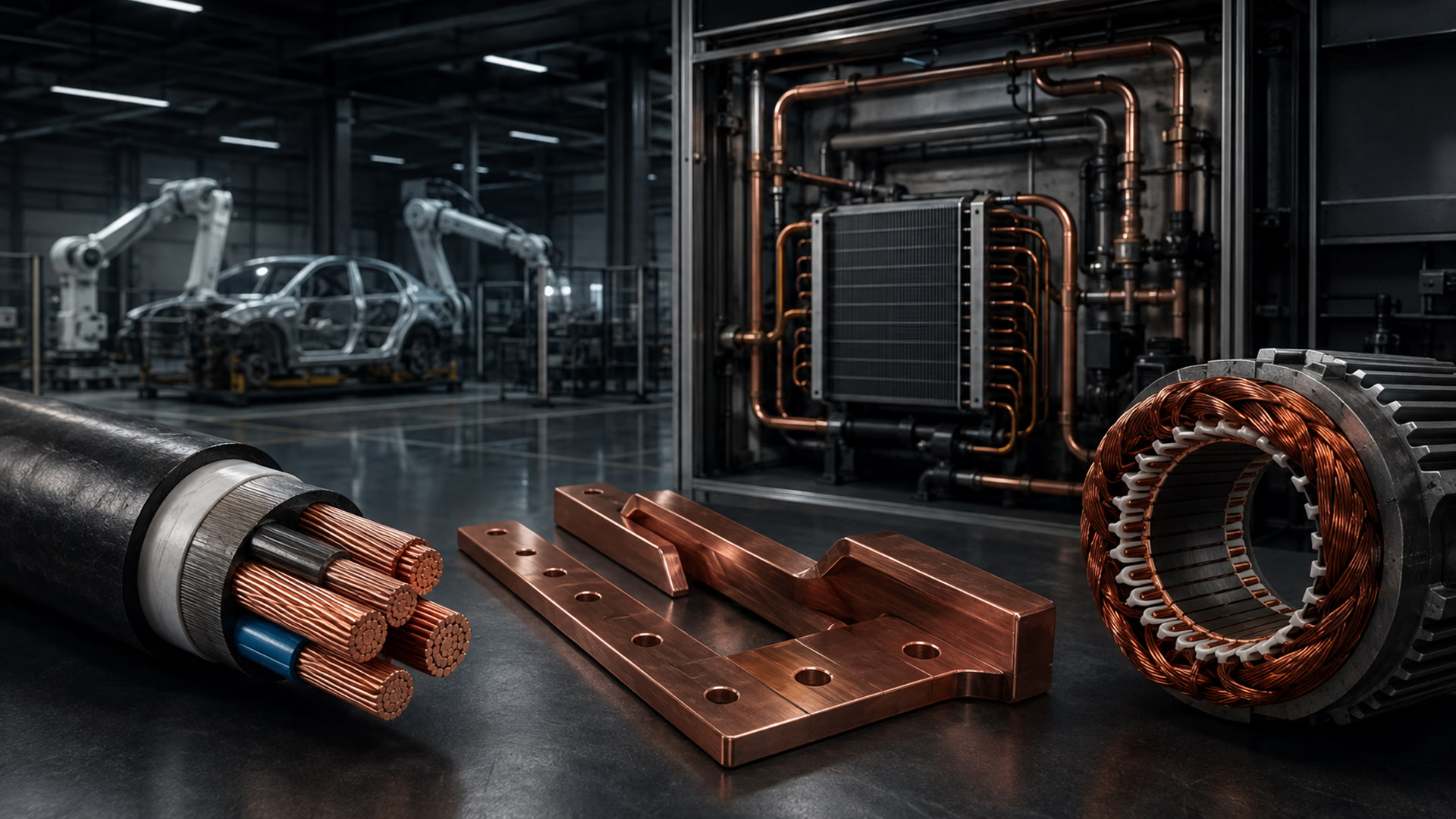
Copper appears in power cables, motors, buildings, vehicles, electronics, heat exchangers and many alloys. The reason is a useful combination of electrical and thermal conductivity, formability, corrosion resistance and recyclability. However, those uses do not all buy the same copper form or specification.
The U.S. Geological Survey (USGS) states that electrical uses—including power transmission and generation, building wiring, telecommunications, and electrical and electronic products—account for about three quarters of total copper use. USGS also identifies construction as the largest end market, followed by electrical and electronic products, transportation, industrial machinery, and consumer and general products.
1. Power generation, grids and cable
Copper's high conductivity makes it important in generators, transformers, switchgear, busbars, power cable and distribution equipment. A buyer in this chain may start from refined cathode, wire rod, drawn wire, strip or another converted form.
The RFQ should connect the requested form to the next production step. For wire rod, useful fields can include diameter, conductivity reference, surface expectations, coil arrangement, unit weight, packing and the intended drawing or cable route. The exact values must come from the buyer's specification and current supplier documents.
2. Buildings and infrastructure
Buildings use copper in electrical wiring, grounding, plumbing tube, heating and cooling systems, roofing and architectural details. The required form can range from rod and wire to tube, sheet or strip. Fire-safety, electrical, pressure or building standards may apply depending on the finished system and destination.
USGS Mineral Commodity Summaries 2025 gives a useful example for the United States market: construction accounted for an estimated 42% of U.S. copper and copper-alloy product use, electrical and electronic products 23%, transportation 18%, consumer and general products 10%, and industrial machinery 7%. These percentages describe U.S. use, not the world market. See USGS MCS 2025.
3. Transport and electric mobility
Cars, trucks, rail systems, ships and charging infrastructure use copper in wiring, motors, power electronics, connectors, thermal systems and charging equipment. Electrified vehicles and their supporting infrastructure can require more conductors and power equipment, but the specification still depends on the component—not on the broad label “transport copper.”
A transport-related enquiry should name the component or conversion route, conductivity requirement, alloy if applicable, dimensions, mechanical requirements, surface condition, certification and inspection plan.
4. Industrial machinery and heat transfer
Motors, generators, process equipment and heat exchangers use copper and copper alloys for electrical performance, heat transfer, machinability or corrosion behavior. Sheet, tube, rod and alloyed forms can serve very different duties.
This is where a clear end use prevents a wrong offer. A product suitable for electrical conductivity is not automatically suitable for a pressure component, machined fitting or heat-exchanger surface. The analysis and specification need to match the real application.
5. Electronics and communications
Electronics use copper in printed circuits, connectors, semiconductor interconnects, shielding, data cable and telecom equipment. Dimensions and tolerances can be much tighter than in general construction uses. Surface condition, plating compatibility, purity and traceability may also matter.
A public catalogue cannot replace the component drawing or approved material standard. Buyers should attach the current requirement document and mark any critical characteristic that must appear on a certificate or inspection record.
6. Brass and other copper alloys
Copper is also alloyed to produce brass, bronze and other engineering materials. Brass combines copper with zinc in composition ranges suited to casting, forming, machining and specific service conditions. This is why “copper content” alone is not a complete brass specification.
For brass ingot, sheet, coil or rod, the enquiry should state the alloy reference, form, temper where relevant, dimensions, tolerance, surface, packing and intended use. Brass scrap should be described by source, sorting, attachments, contamination and representative analysis.
7. Recycling and secondary copper
Copper can be recovered, but scrap categories are not interchangeable. Bare wire, busbar offcuts, tube, mixed copper and copper-bearing assemblies can carry different attachments, coatings, oil and other contamination. Photos help, but a serious enquiry also needs declared preparation, packing, approximate quantity and an agreed inspection basis.
From application to RFQ
- Name the final industry and the buyer's next process.
- Select the required product form: concentrate, cathode, ingot, wire rod, scrap or another documented form.
- Attach the analysis or specification reference.
- Add dimensions, tolerance, surface and packing fields that matter to the process.
- State quantity, delivery cadence, destination and inspection requirement.
Source note: the broad use statements come from USGS Copper Statistics and Information. The percentage split is specifically for the United States and comes from USGS Mineral Commodity Summaries 2025; it should not be read as a global end-use split.